


Oven Baked Pork Tenderloin with Pears and Sweet Onions starts with a quick stovetop sear to create a caramelized crust, then finishes in the oven on a bed of sweet onions and crisp pears. A splash of apple brandy and a spoonful of brown sugar melt into the pan, forming a light reduction that coats every slice. Cooked in a single oven-safe skillet and ready for a family dinner or holiday table, this pork tenderloin turns simple ingredients into a tender, flavorful main dish without any complicated steps.
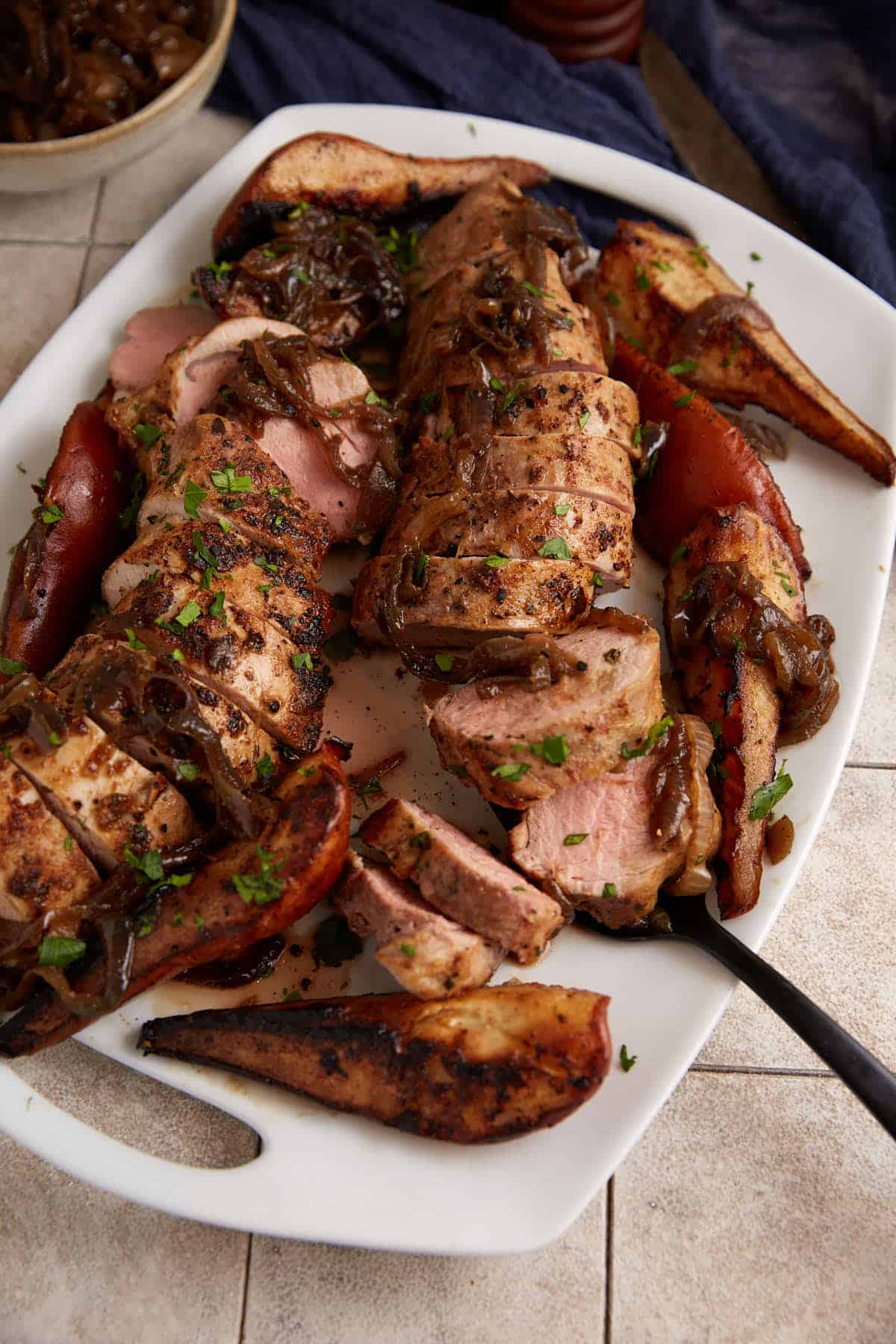
The Juiciest Oven Baked Pork Tenderloin
This pork is super tender and it’s cooked on a bed of onions that caramelize while it roasts. Add a little apple brandy and brown sugar at the end and spoon the mouth-watering onions over the roasted pork and pears.
One of the secrets to cooking really good pork tenderloin is searing it first. Searing the meat creates the tastiest caramelized crust on the outside that traps all the moisture inside. So, as it finishes cooking, it stays really moist from edge to center.
It’s no secret I’m a fan of pork. Economical, flavorful, and versatile, there’s nothing better when it’s cooked right. Pork tenderloin takes the cake for being my absolute favorite cut. It makes the best pork cutlets with just a squeeze of lemon and it’s mild enough to support a cherry chutney sauce or a bacon and a peach glaze.
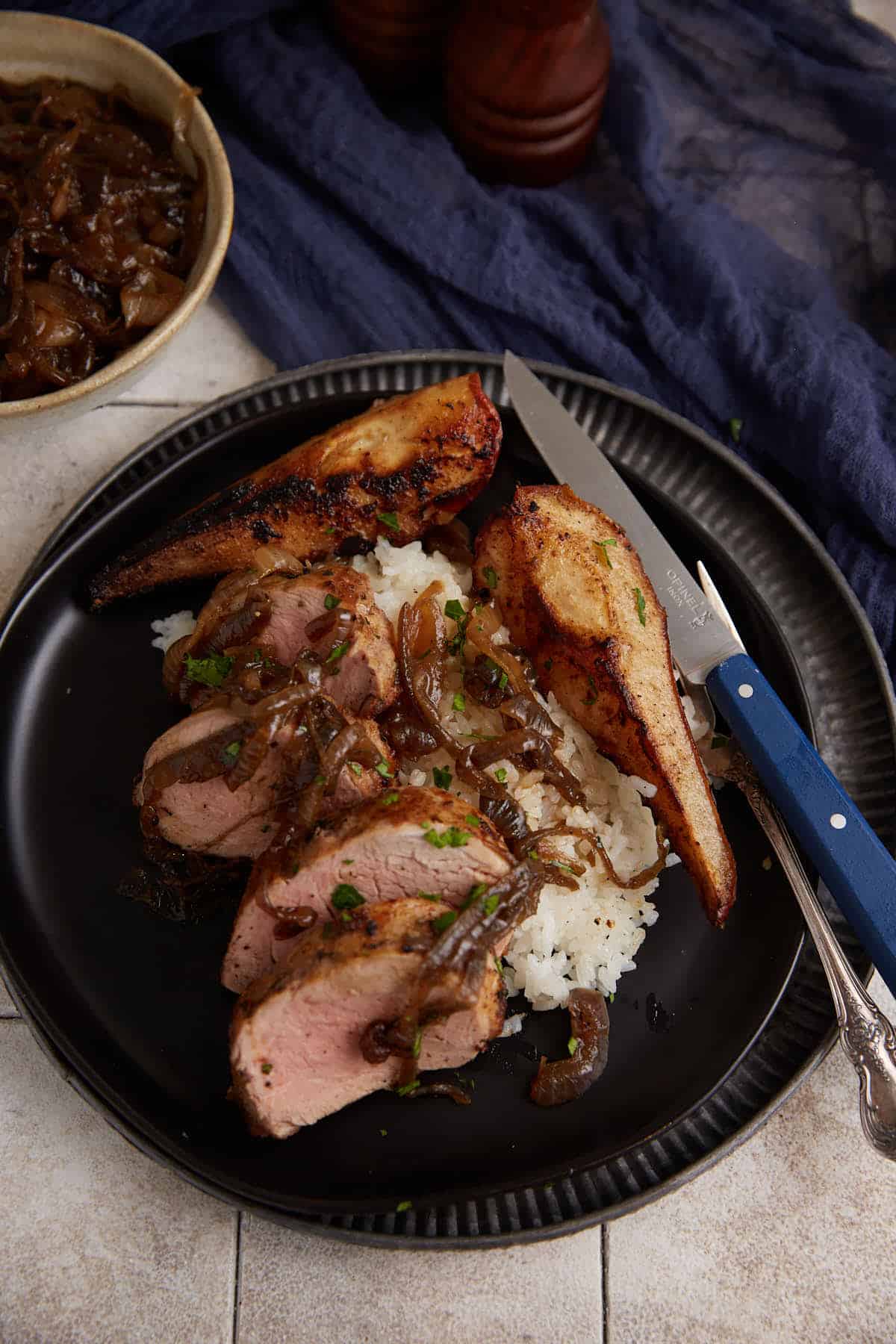
This recipe uses crisp pears, sweet onions, and even a bit of apple brandy. It’s a winning combo, whether on a weeknight or entertaining friends.
This recipe is a comfort food dish that pairs well with almost any Southern side dish recipes.
Substitutions For Apple Brandy
This recipe uses apple brandy to make a sweet liquid that reduces as the pork cooks in the oven. If you prefer to skip the brandy or don’t have it on hand, don’t worry. You can use a couple of equally delicious substitutes that will still give you the unique and tasty flavor that makes this pork tenderloin so special.
One option is balsamic vinegar. It adds a tangy sweetness and a depth of flavor that compliments the pears really nicely. Or, you can use apple cider. It brings a bit more of a naturally sweet taste along with a hint of tartness.
Ingredients Notes
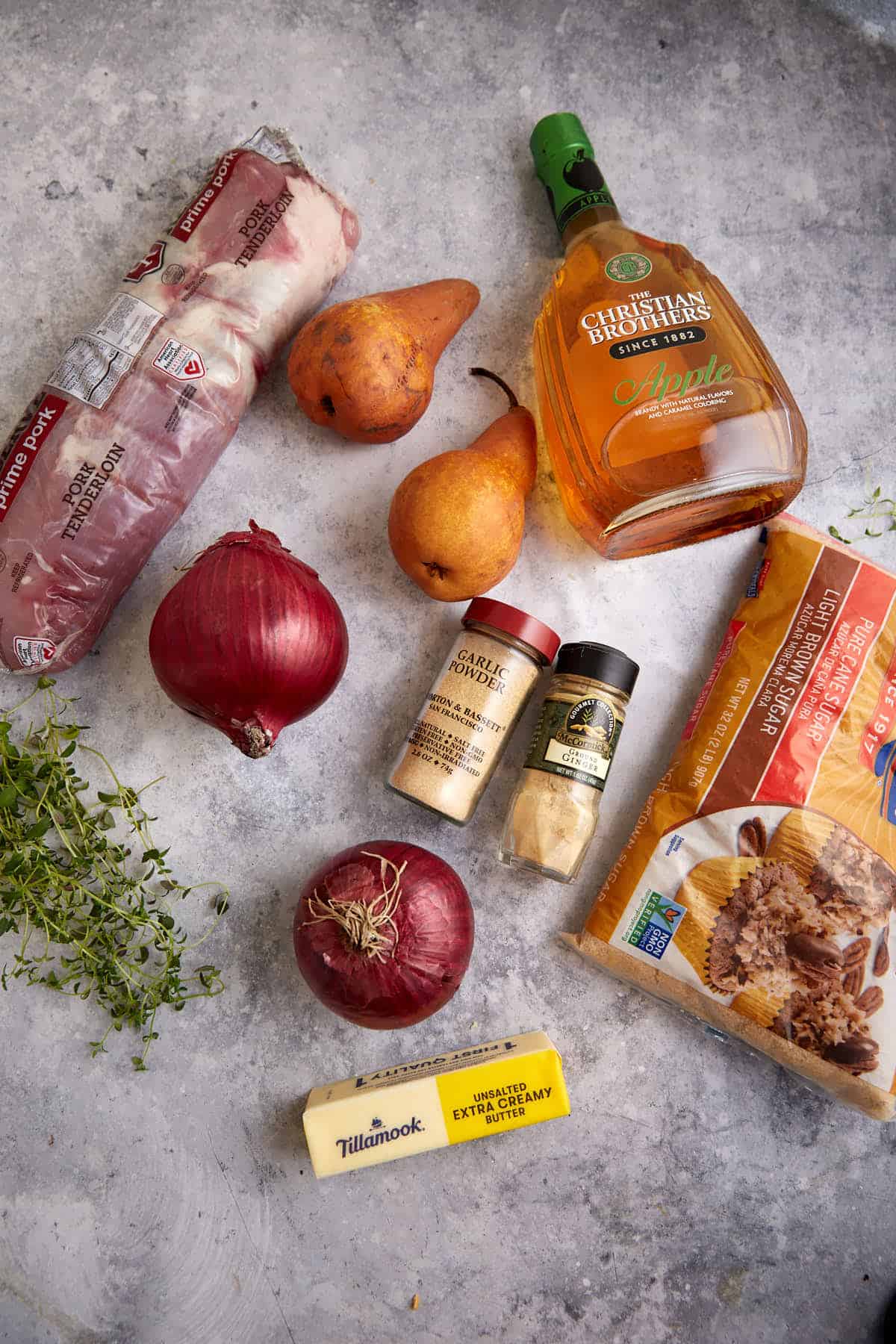
- Pork tenderloins – This recipe calls for 2 tenderloins, they come in a pack of 2 most of the time. You can half the recipe if needed.
- Pears – You can use Bosc, Anjou or Bartlett pears. Those are the only ones that are available in my area of the country. Other varieties might also work, but I’m not familiar with them. Your pears should be fresh and a little firm. Otherwise, they’ll end up mushy. You can also use apples.
- Apple brandy – Any brand will do, it brightens the fruit flavor. You can also use apple cider or leave it out all together.
How to Make Oven Baked Pork Tenderloin in a Skillet
Step 1: Prepare your pork.
Open up the package of meat in the sink to catch the juices. Pat them dry with paper towels and remove any large fatty areas. Small ones can stay, and they’ll contribute to the yummy, caramelized crust and juicy inside. Now, your tenderloins are ready for use.
Step 2: Make a dry rub
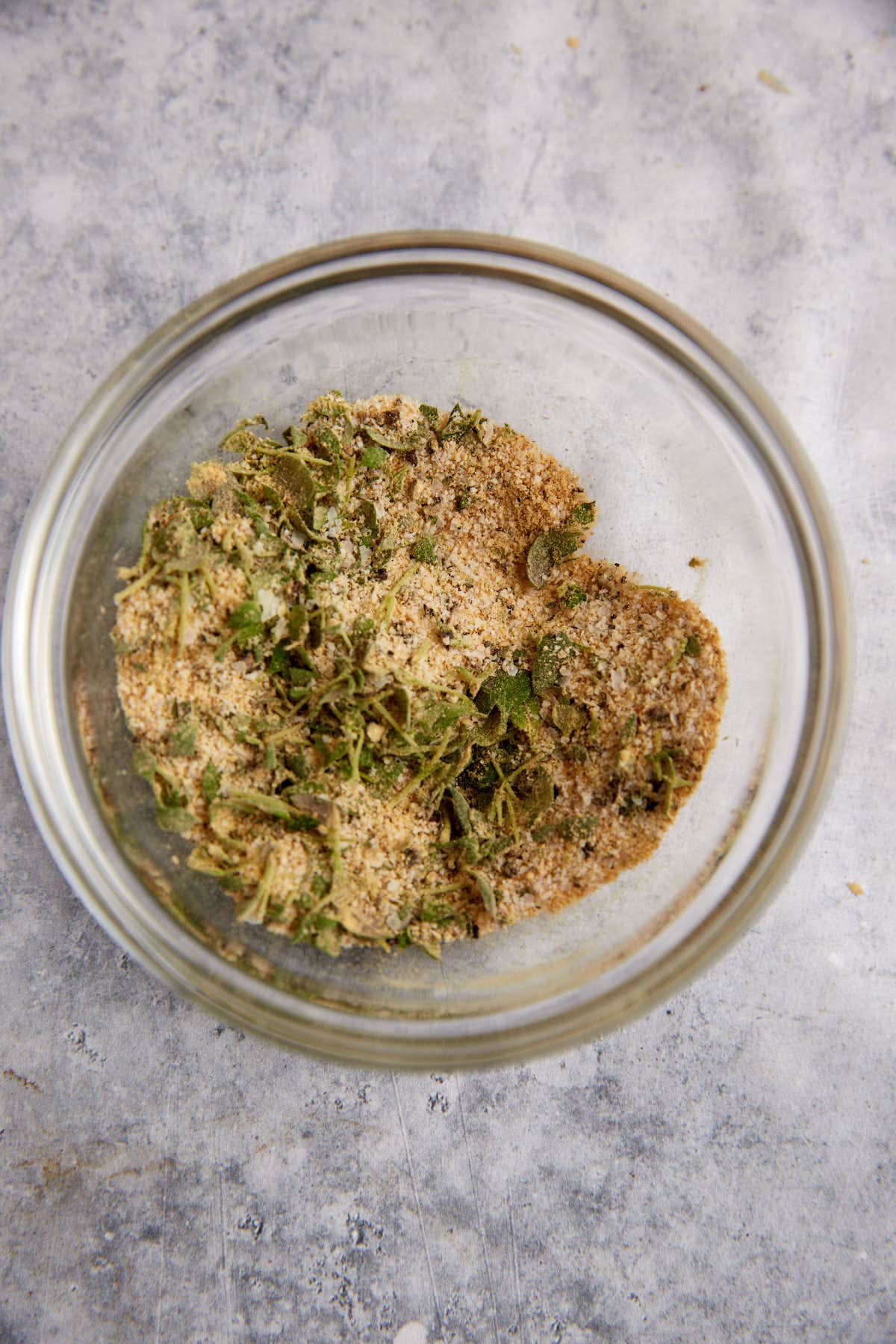
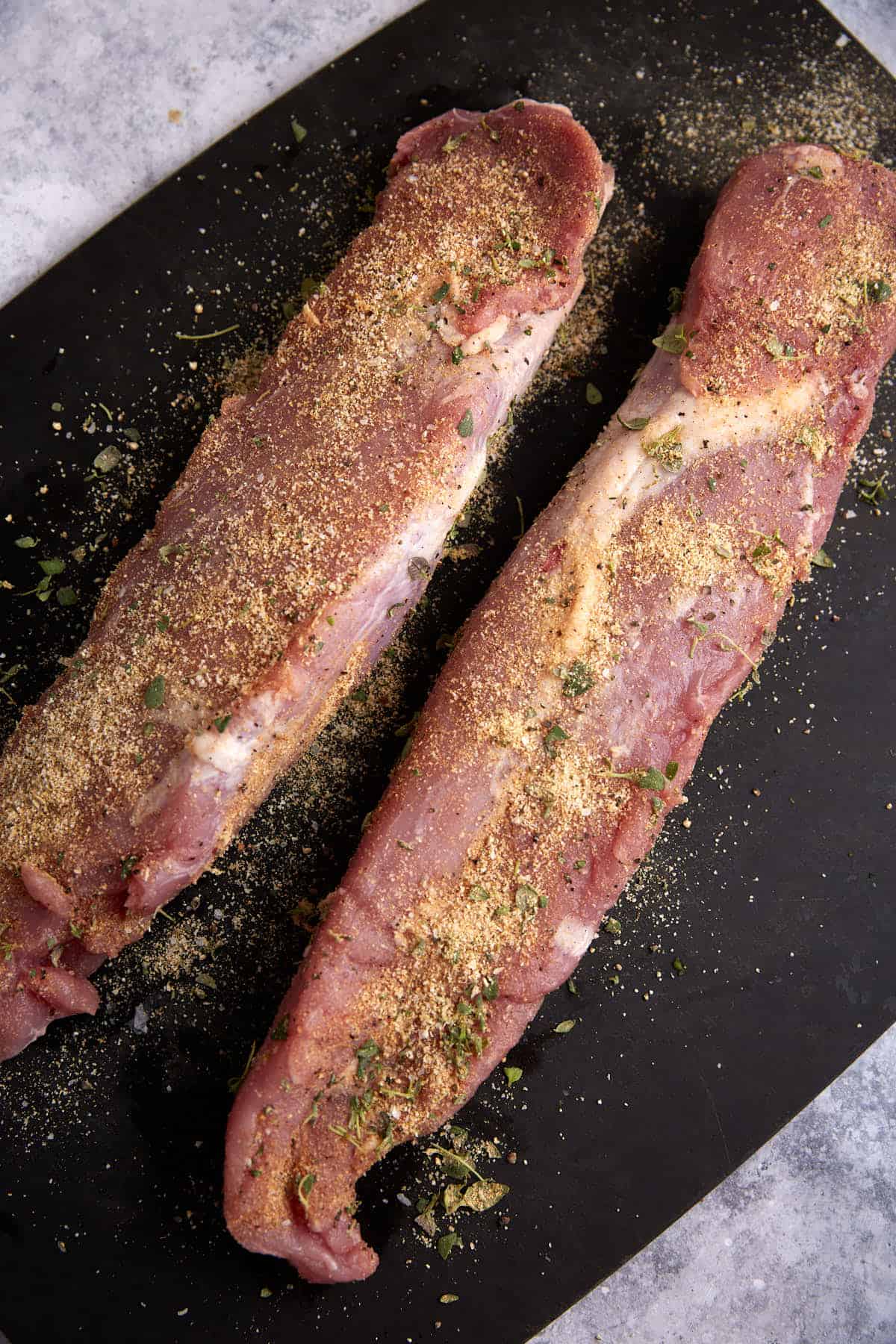
Pro Tip: If you have time, you can let the spice mixture sit on the pork for 30 minutes to an hour, but it’s not necessary.
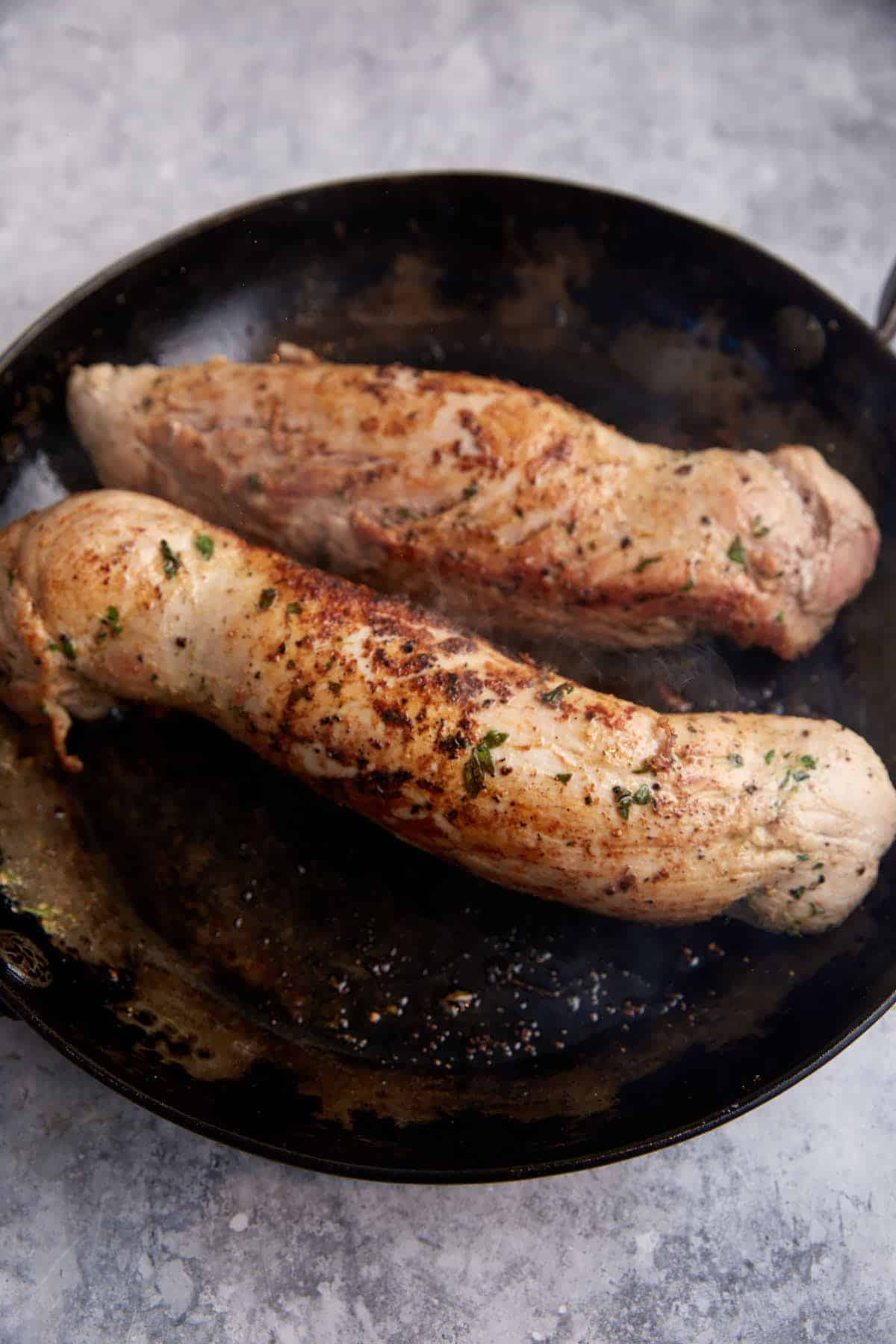
Step 3: Sear the meat
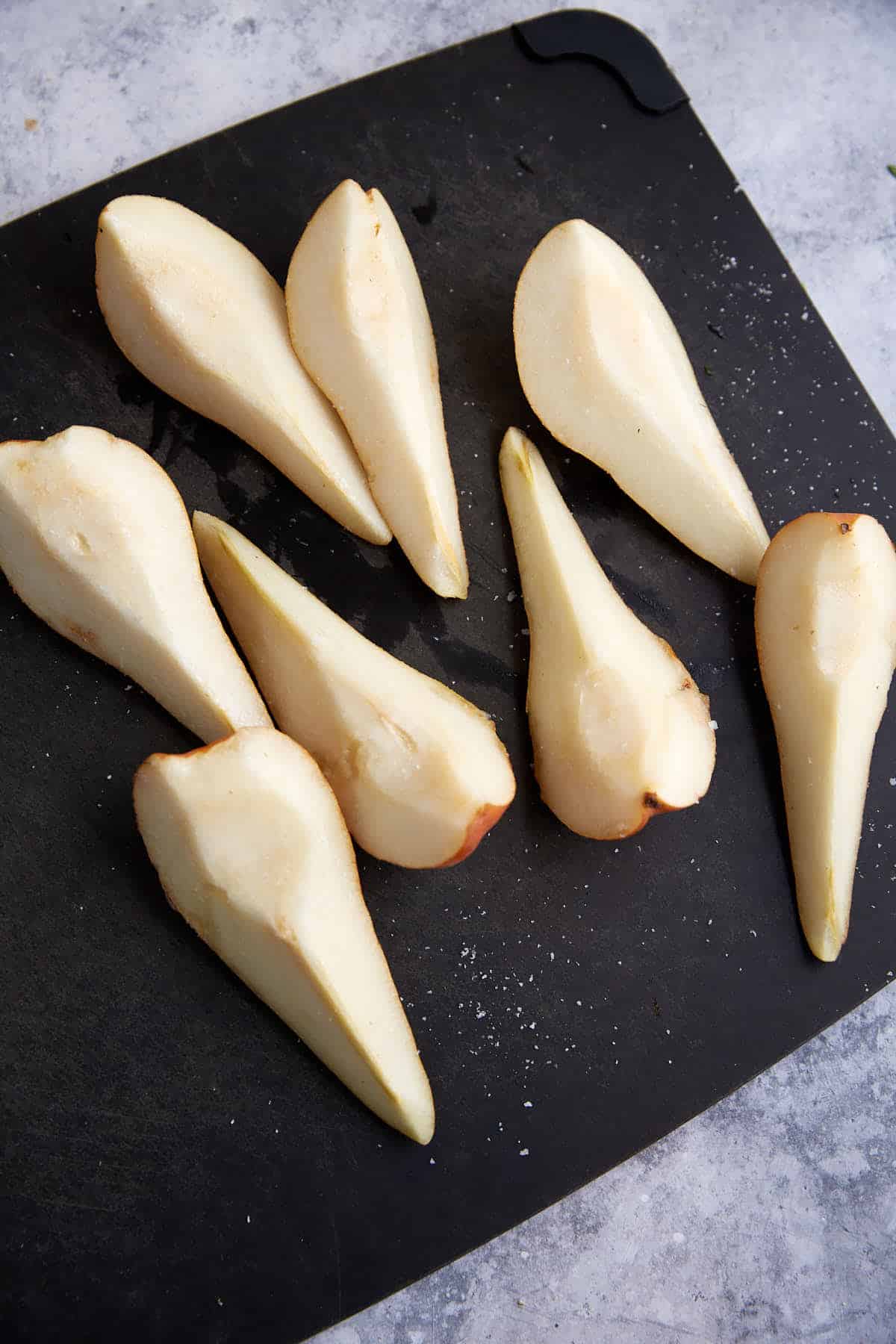
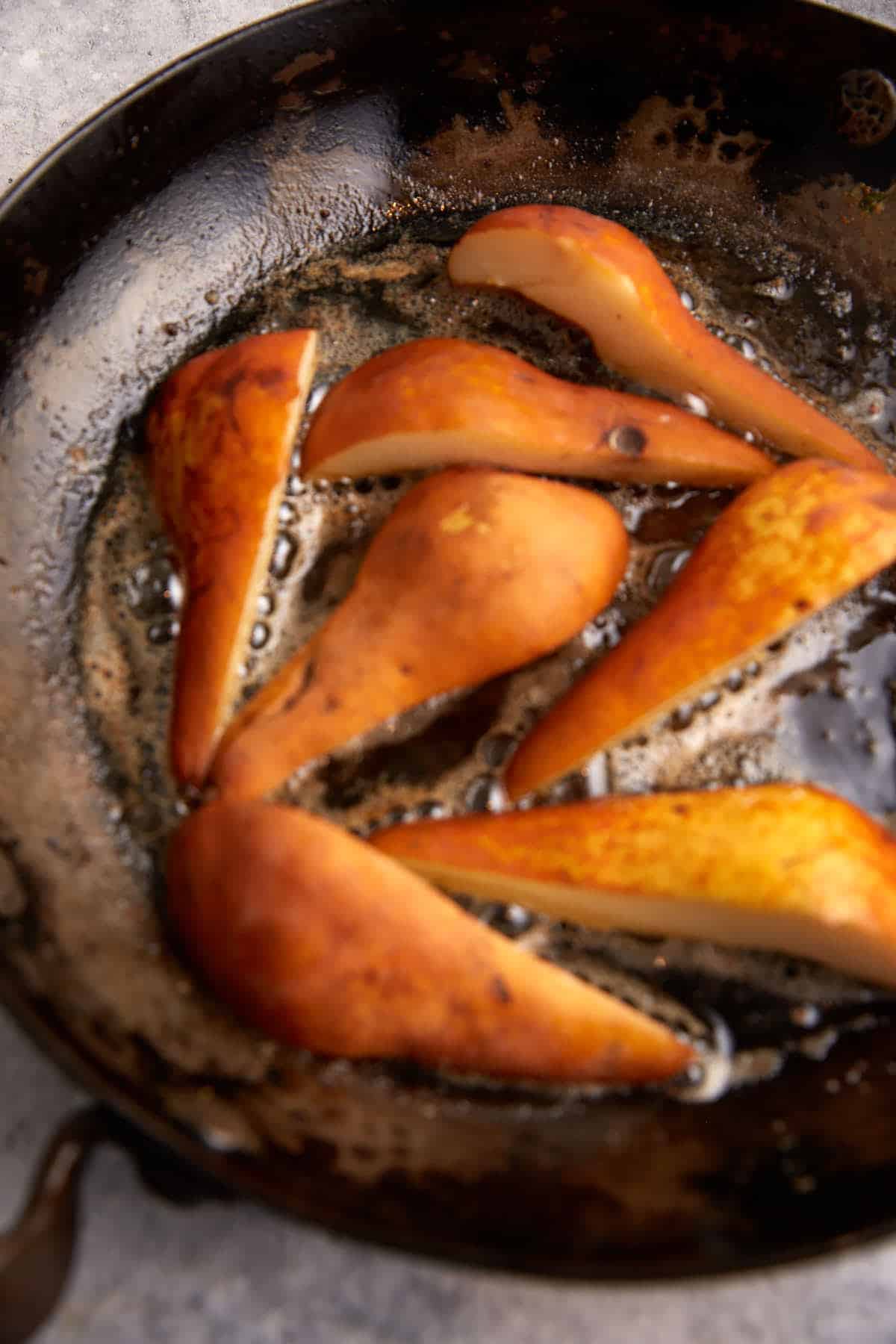
Step 4: Cook the pears.
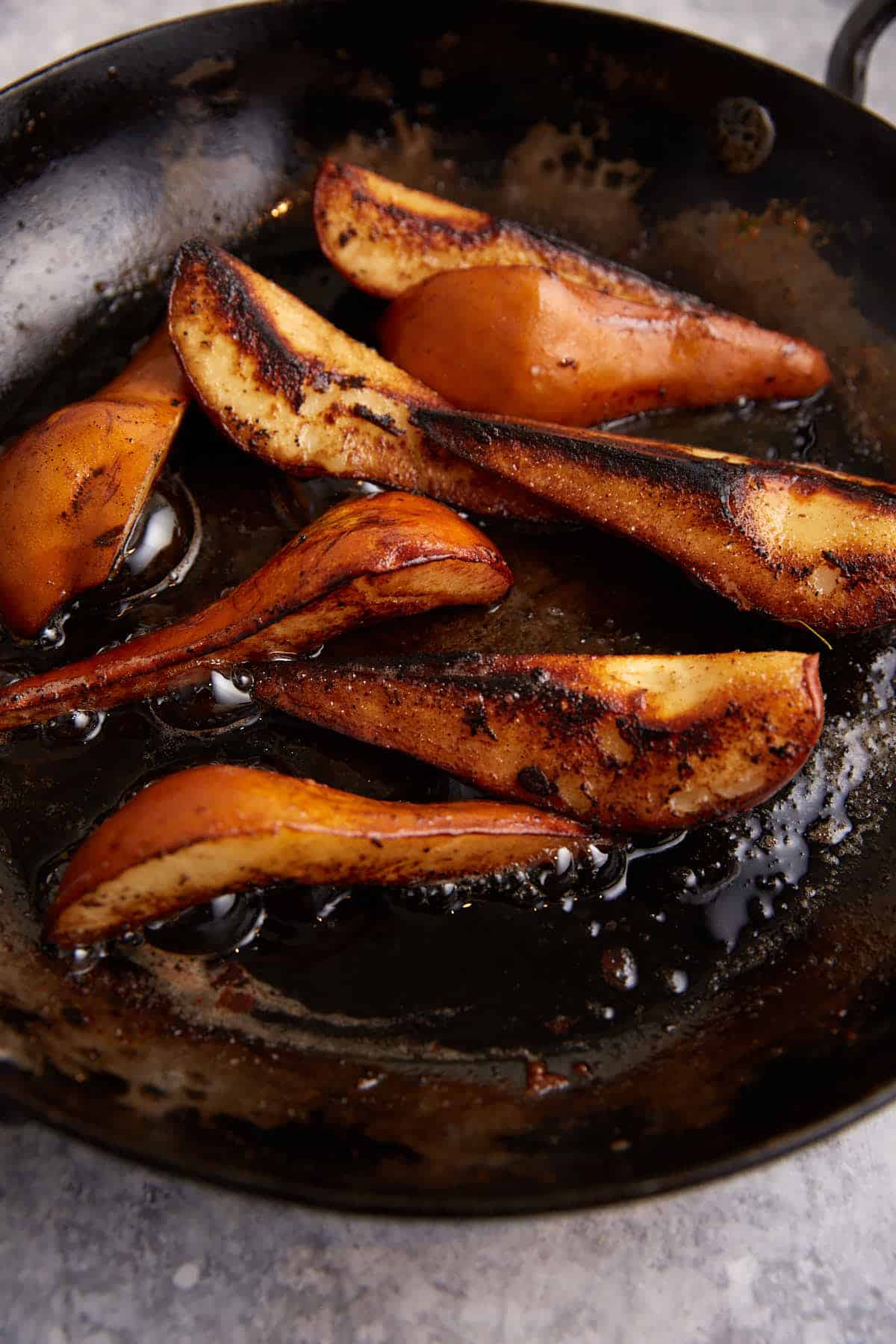
Step 5: Prepare the onion and brandy mixture.
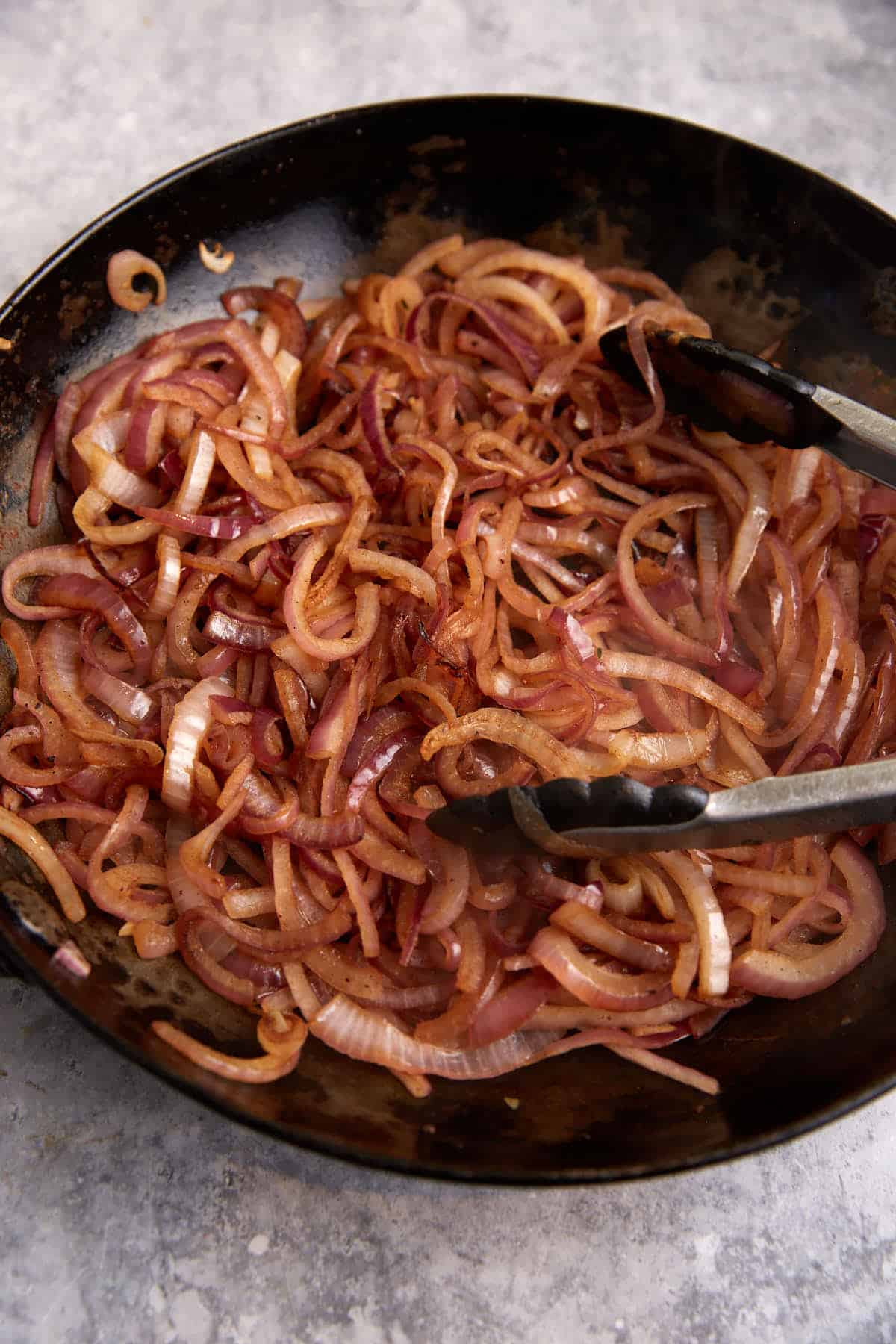
With the skillet still hot, add in the sliced onions. Sprinkle them with a bit of salt and continue to cook, stirring often, until they’ve softened and browned. Turn off the stove and move the skillet off of the hot burner. Add the brandy and brown sugar to the onions, and stir with a wooden spoon until the sugar dissolves.
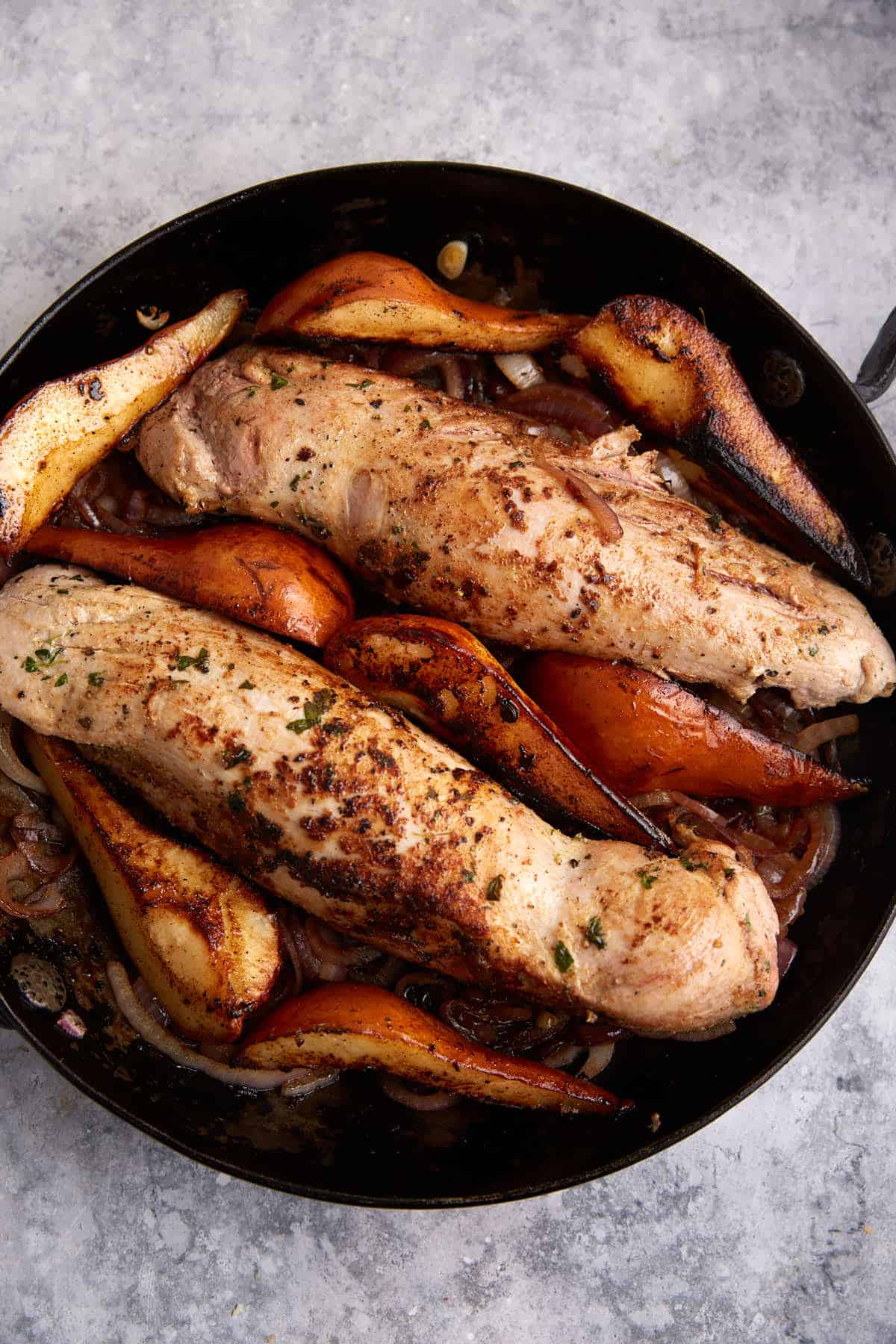
Step 6: Finish in the oven.
A meat thermometer is your best friend when it comes to cooking pork. And I find the best way of making sure pork doesn’t get overcooked is to remove it from the oven when it’s just a touch underdone, 135º to 140º. It will continue to cook after it’s removed from the oven.
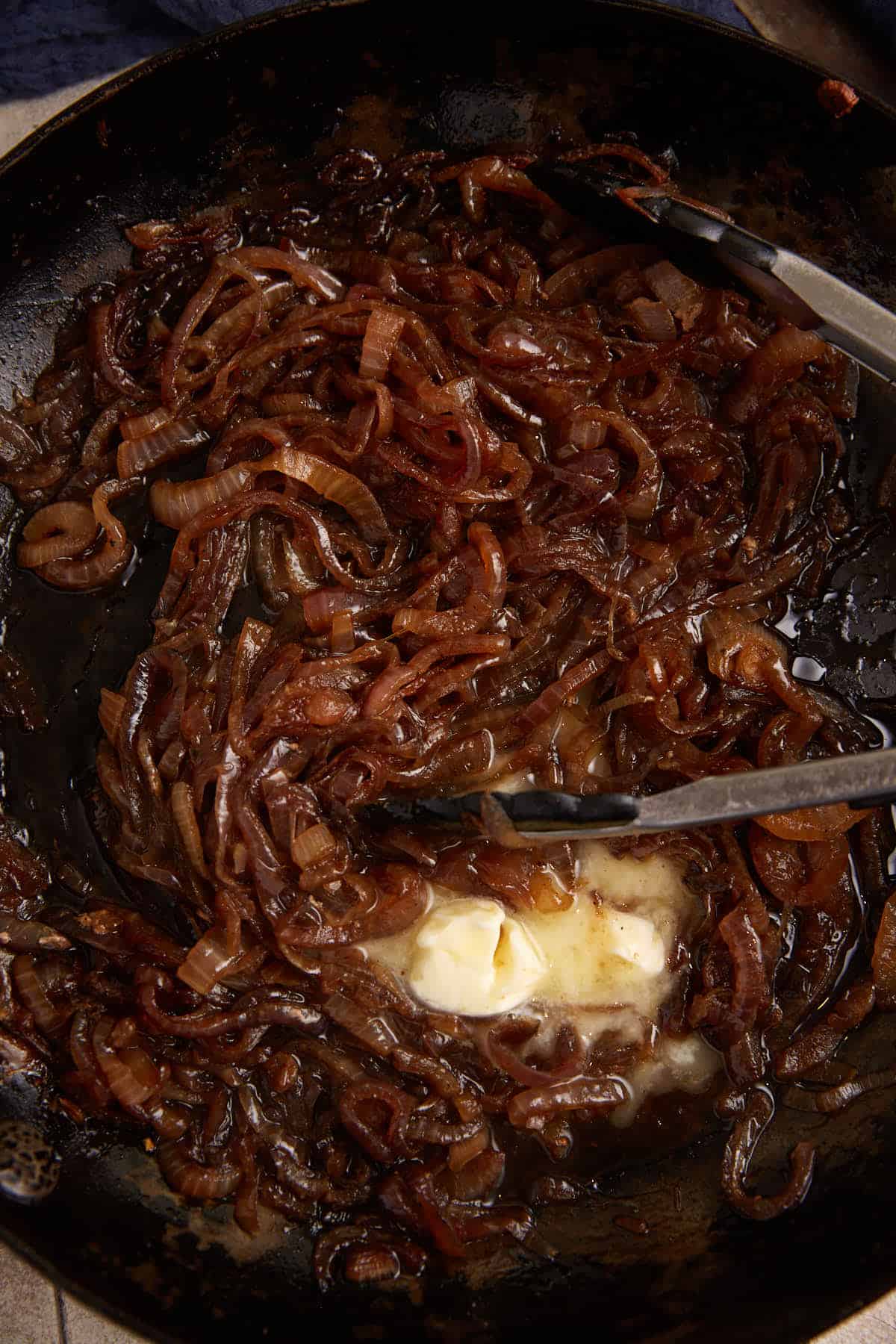
Step 7: Thicken the sauce and serve.
While the meat rests, set the skillet over low heat on the stovetop. Add butter and stir, allowing the mixture to thicken a little. Turn off the heat.
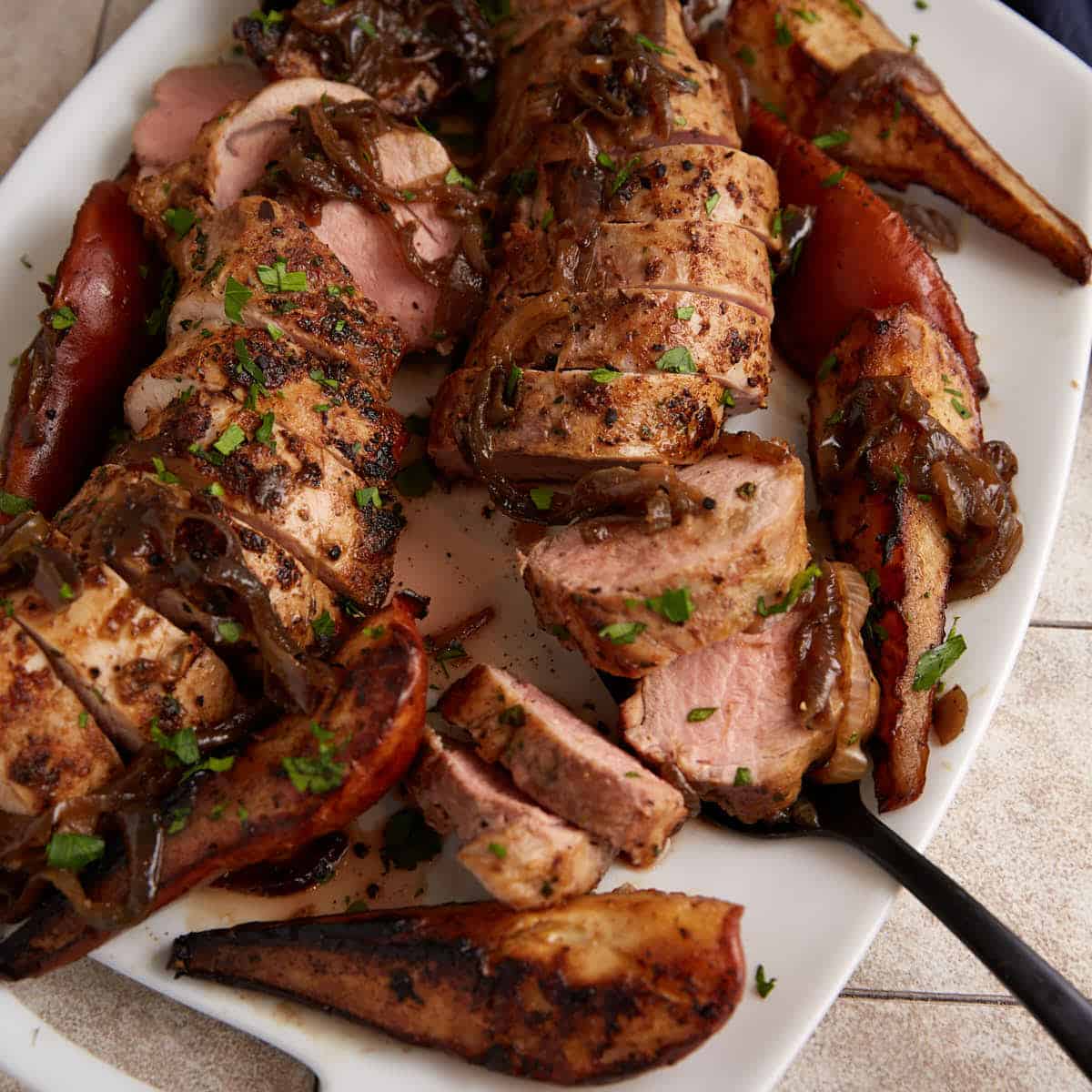
Cut the meat into 1-inch slices and set it on a serving platter along with the pears. Spoon the onions and sauce over the top, and serve.
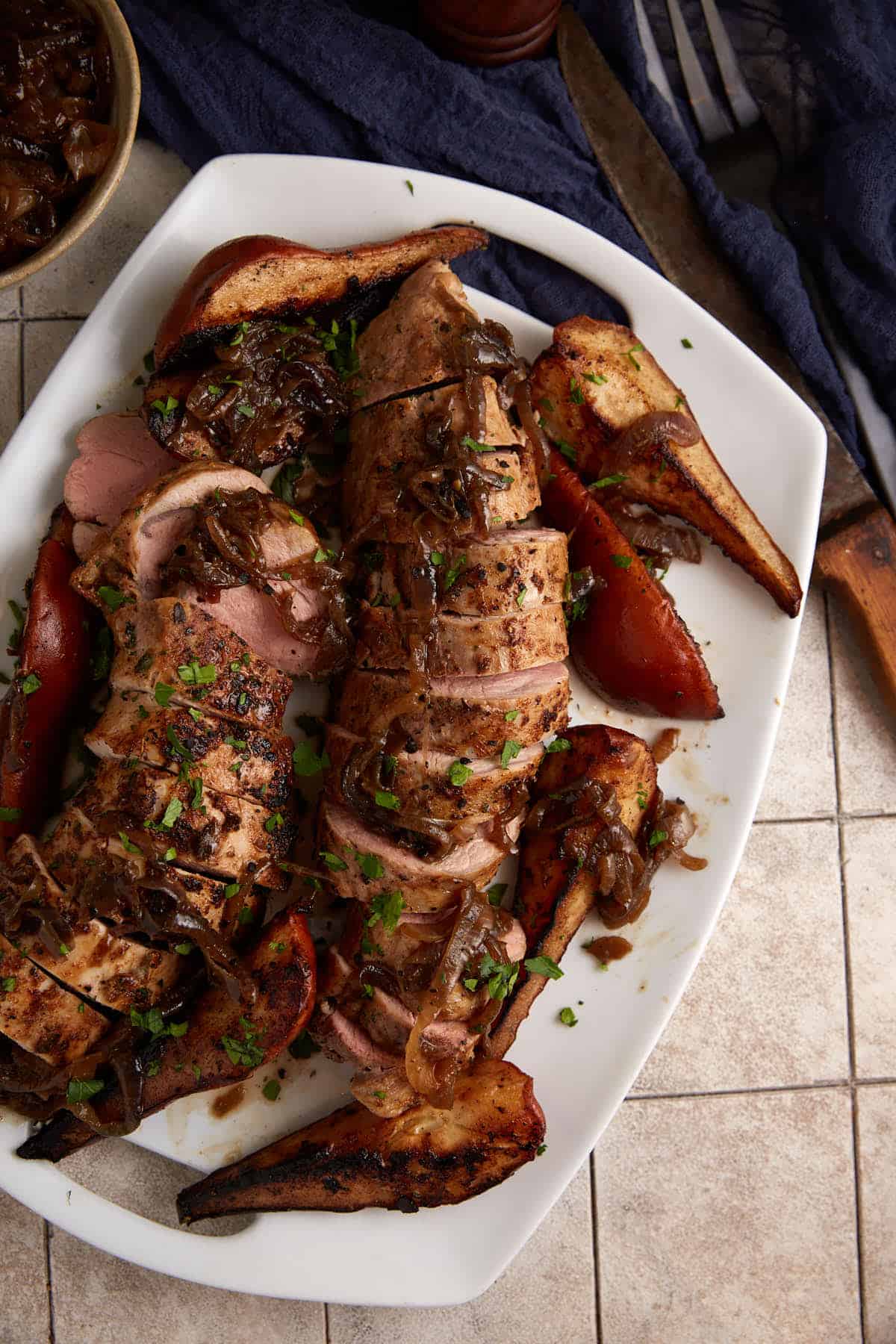
When you want a dinner that looks like you planned ahead but doesn’t require a culinary degree, this is the one to make. The skillet does most of the work, the oven finishes it gently, and you end up with a platter that looks beautiful and tastes even better. Slice it, spoon those onions and pears over the top, and watch how quickly everyone reaches for seconds.
A Few Recipe Notes for Oven Roasted Pork Tenderloin
- Make sure the skillet is very hot when you sear it. You want to hear it sizzle! To test whether the pan is hot enough, sprinkle a few drops of water into the pan. If they sizzle and steam away quickly, your pan is ready.
- When you stir the brown sugar into the brandy, try to deglaze the pan, too. There are plenty of yummy bits of onion and pork on the bottom of the pan, so use the wooden spoon to loosen them and incorporate them into the sauce.

If you loved this recipe, give it a star ⭐️⭐️⭐️⭐️⭐️ rating! Also, snap a picture of your finished dish and share it with me on Instagram using the hashtag #butterandbaggage and tagging me @butterandbaggage.
Oven Baked Pork Tenderloin with Pears and Sweet Onions
Ingredients
- 2 1-¼ lb pork tenderloins
- 2 teaspoons salt
- 1 teaspoon pepper
- 1 tablespoon fresh thyme chopped
- 1 teaspoon ground ginger
- 1 teaspoon garlic powder
- 1 tablespoon olive oil
- 2 Bosc pears firm and ripe
- 4 tablespoons butter divided
- 2 red onions sliced
- ¼ cup apple brandy
- 2 tablespoons brown sugar
Instructions
- Preheat the oven to 400º.
- Pat pork dry and trim any fat.
- In a small bowl combine the salt, pepper, thyme, ginger and garlic powder. Rub over the pork tenderloins.
- Heat the oil in a large skillet over medium high heat. When hot, add both pork tenderloins, searing each side until browned, about 6 minutes. Remove to a plate and wipe the skillet with a paper towel.
- Cut pears into quarters and core. To the empty skillet add 2 tablespoons butter and let it melt over medium heat. Sprinkle pears with a little salt and place them flesh side down in the skillet. Cook until the cut surface has browned turning as needed, about 5 minutes. Remove to the plate with the pork.
- In the skillet over medium heat, add the onions, sprinkle with a little salt. Cook, stirring often until they have softened and are turning brown, about 5 minutes. Remove from the heat and add apple brandy and brown sugar. Stir until the sugar has dissolved.
- Add the pork and pears to the top of the onions in the skillet and place in the oven for about 12 minutes depending on the thickness of the tenderloins. Check after 8 minutes with a meat thermometer. Remove once they have reached 135º in the thickest part. Remove the pork and pears to a cutting board to rest for 10 minutes. Cut into 1 inch slices.
- Place skillet over low heat and add butter to the onions stirring until it has slightly thickened. Spoon over sliced pork and pears.
Barbara’s Tips + Notes
- Make sure the skillet is very hot when you add in the pork to sear it. You want to hear it sizzle! To test whether the pan is hot enough, sprinkle a few drops of water into the pan. If they sizzle and steam away quickly, your pan is ready.
- When you stir the brown sugar into the brandy, try to deglaze the pan, too. There are plenty of yummy bits of onion and pork on the bottom of the pan, so use the wooden spoon to loosen them and incorporate them into the sauce.
Nutrition
 Follow Me On SocialDid you make this recipe? Mention @ButterandBaggage or tag #ButterandBaggage
on Instagram!
Follow Me On SocialDid you make this recipe? Mention @ButterandBaggage or tag #ButterandBaggage
on Instagram!
Leave a Reply